Single Phase Recloser – Rocket-1

1. Introduction
The design and manufacture of the equipment was validated by the CESI
laboratory in Italy. All tests referred to by IEEE C37.60 standard, in its latest version,
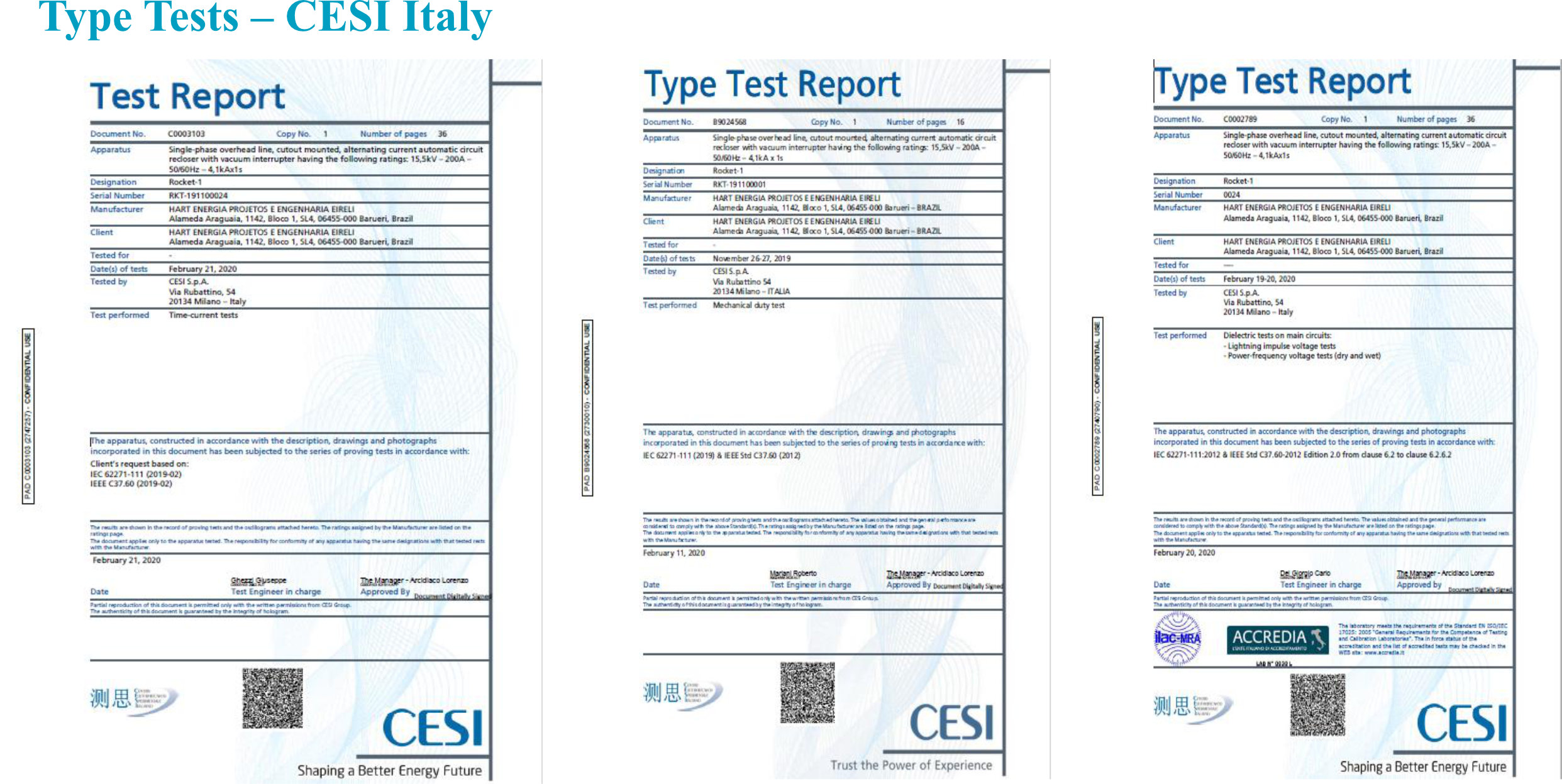
were carried out, and the equipment was fully approved. Type test reports are available
for evaluation.
Some highlights of Rocket-1 recloser:
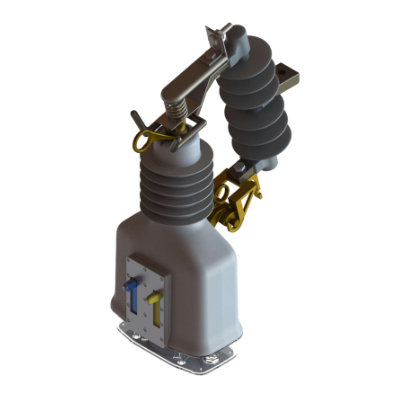
⎯ Installation in conventional fuse cutouts
⎯ 100% polymeric body, injected in high pressure
⎯ Battery free – (Use of Supercapacitors)
⎯ Mini solar panels for maintaining stored energy, when the recloser is “in lockout”
⎯ Average autonomy of 3 days without power, when the recloser is “in lockout status”
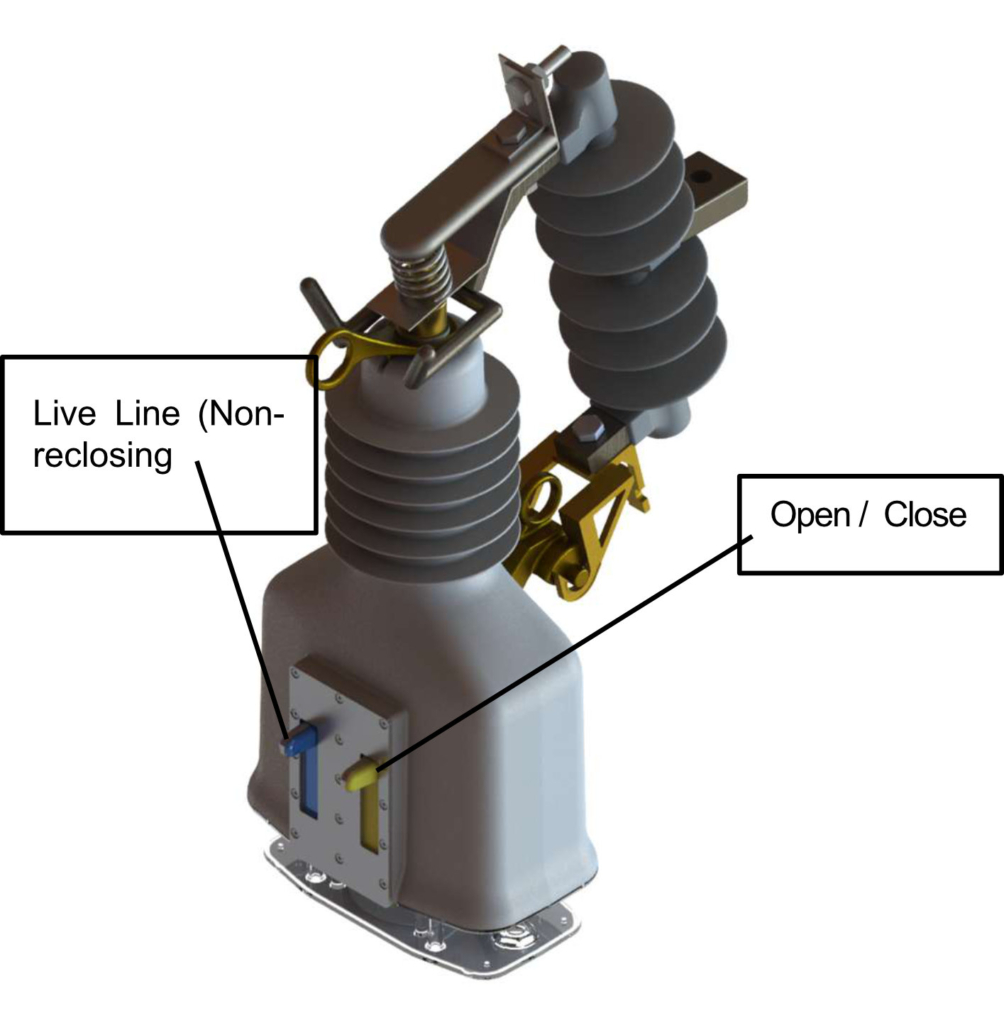
⎯ Levers for manual operations
⎯ Recloser remains in fuse cutout after blocking
⎯ Mechanical flag connected to the vacuum interrupter, for viewing the status of the recloser
⎯ Operation by magnetic actuator, without spring loading
⎯ Local communication and parameterization via Bluetooth and Android Application
⎯ Embedded communication for integration with SCADA system
⎯ Embedded GPS and Accelerometer
⎯ Onboard PCI-e slot, for NICs1IoT –LoRa or NB-IoT
⎯ Medium voltage presence sensor (Self-Healing Logics)
⎯ Integration with SCADA systems through DNP3.0
⎯ Operating modes: Recloser, Switch and Sectionalizer, with the option of three-phase blocking in any of the modes
2. Principles of Operation of a Recloser
An automatic recloser has the main function of protecting the electrical network against overcurrent events, usually caused by touching trees on the network, animals or even failures in insulators, among other problems. Reclosers are installed in medium voltage power distribution networks,
generally these networks are distributed in three voltage classes, 15.5kV, 27kv and 38kV. Failures in the electrical power distribution network are usually referred to as “faults”. The term fault is used even when the fault does not cause a permanent interruption in the power supply.
Falts can be divided into temporary and permanent faults. Temporary faults are events where a failure can cause a temporary interruption in the network, or even an overcurrent event, which sensitizes network protection equipment, such as reclosers and fuses. If a temporary fault sensitizes a recloser, it will interrupt the circuit and, following its settings, it will automatically reclose the circuit. If the fault has disappeared, for example a tree branch has just touched the cables, the power is restored normally. If the fault persists, the recloser will perform further attempts, again following its configuration. If the fault persists, it will open and not reclose automatically, going to “lockout”.
In the case of permanent faults, normally a field team from the utility is deployed to verify and repair the problem in the network.
In general, there is a consensus in the market that around 75% of faults in overhead power lines are temporary. Considering that, the extensive use of reclosers in power distribution networks can reduce the need of team displacement by up to 75%, because if instead of a recloser, the circuit is protected by a conventional fuse, the temporary fault would become permanent, due to fuse blows and the consequent need to send a team to replace it and manually restore the power to the consumers. A recloser integrated into the SCADA system, via telecommunication systems, ensures remote monitoring of the network, in addition to information from the equipment itself. it allows remote commands, such as opening and closing, which guarantees a faster and more effective action by the utility, to restore the power in the shortest possible time and with maximum safety for consumers and the company.
3. Rocket-1 – Recloser General Features
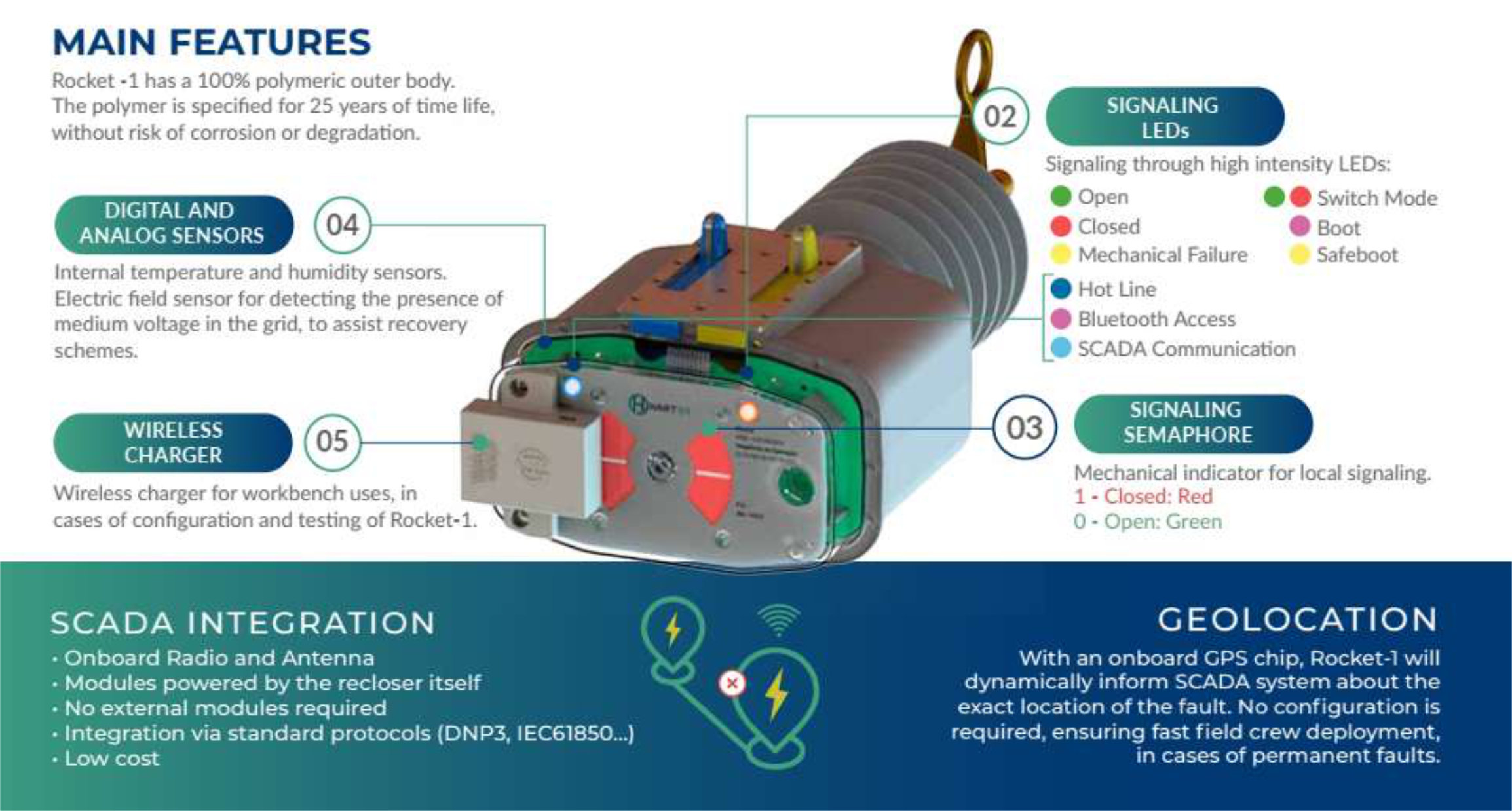
The Rocket-1 single-phase recloser is a microprocessor-based device that is self-powered by the current passing through the primary circuit. It does not have any type of battery. Additionally, it has solar panels on its bottom. The solar energy circuit is operational in any situation, but they are more relevant when Rocket-1 is open in lockout status, after having carried out its reclosing cycle to attempt to restore the electrical network.
In normal operation, Rocket-1 harvests energy from the electrical grid through a current transformer (CT), specially designed for this purpose. This energy is stored in a supercapacitors bank and used to power all the on-board microelectronics, including the telecommunications module and the magnetic actuator, responsible for operating the vacuum interrupter.
The vacuum interrupter is the recloser device responsible for interrupting the medium voltage circuit, whether it is on load or not.
3.2 Operation Modes
In addition to the basic function of a single-phase recloser, Rocket-1 can be configured to operate as a switch and sectionalizer. Switch Mode: In this mode, Rocket-1 disables its protection elements, not opening in the event of a fault. All communication and remote-control functions remain active in this mode, including open/close commands. Sectionalizer Mode: In this mode, Rocket-1 operates in conjunction with an upstream recloser, regardless of the manufacturer. Rocket-1 will count the short-circuit events, followed by the upstream recloser opening events. During the dead time of this
recloser, Rocket-1 will open, according to its settings. So, when the upstream recloser closes, the fault will be isolated.
Three-Phase Lockout Mode: Rocket-1 can operate in conjunction with other Rockets, in a set of up to 3 reclosers. With this mode activated, the reclosers communicate with each other through the Bluetooth module. When one of the reclosers in the arrangement goes to lockout, it sends a local command to the other Rockets, so all reclosers go to lockout.
This mode can be enabled on reclosers regardless of whether they are configured as switch, sectionalizer or recloser.
3.3 Communication
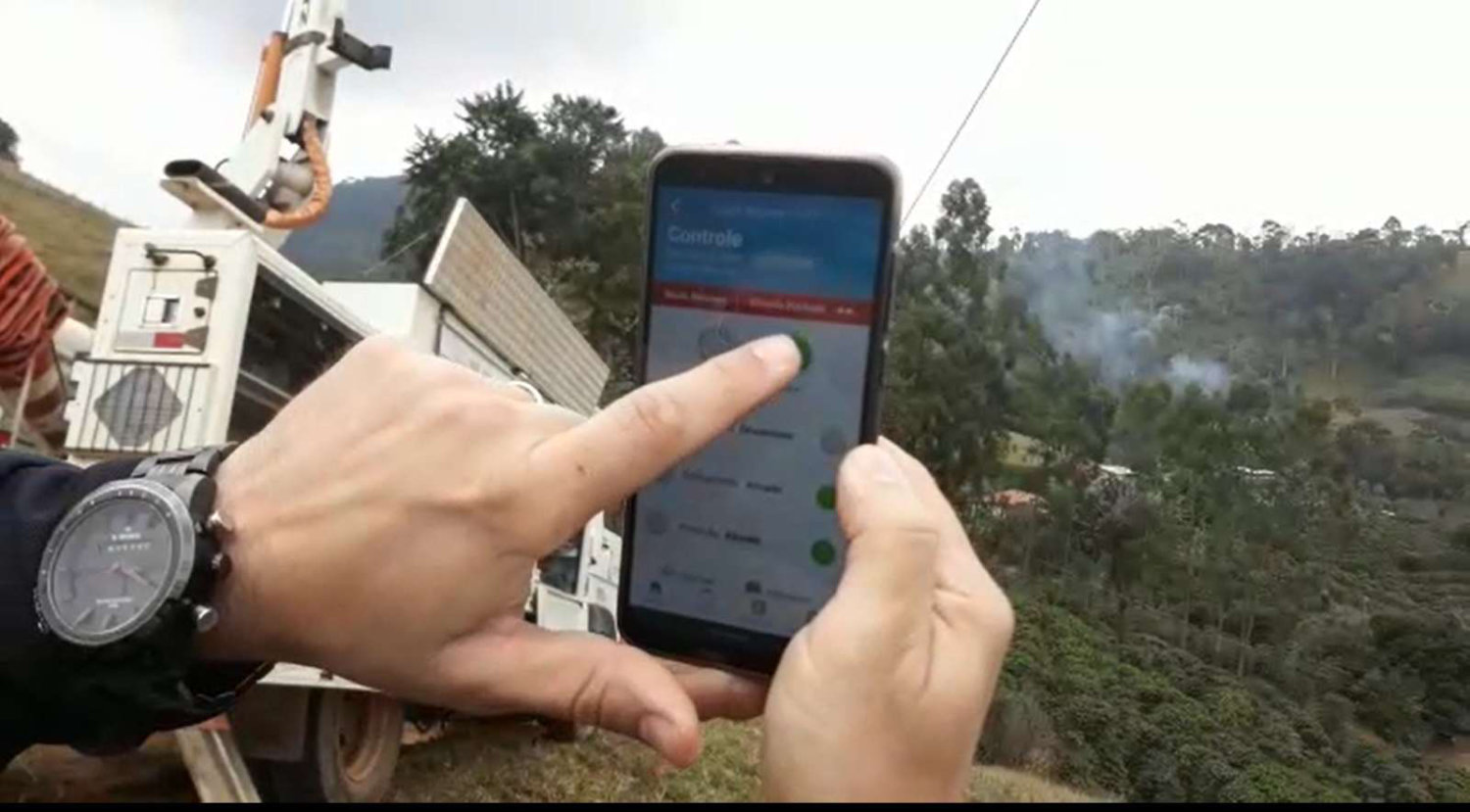
Rocket-1 recloser is set through the Hart Devices application, supported by the Android operating system, for smartphones or tablets. Communication between Rocket-1 and the application is done via Bluetooth, thus not requiring extra devices for
this purpose. The Hart Devices application allows configuring the recloser, monitoring the passing current and grants access to the event logs.
3.3.1 Hart Devices
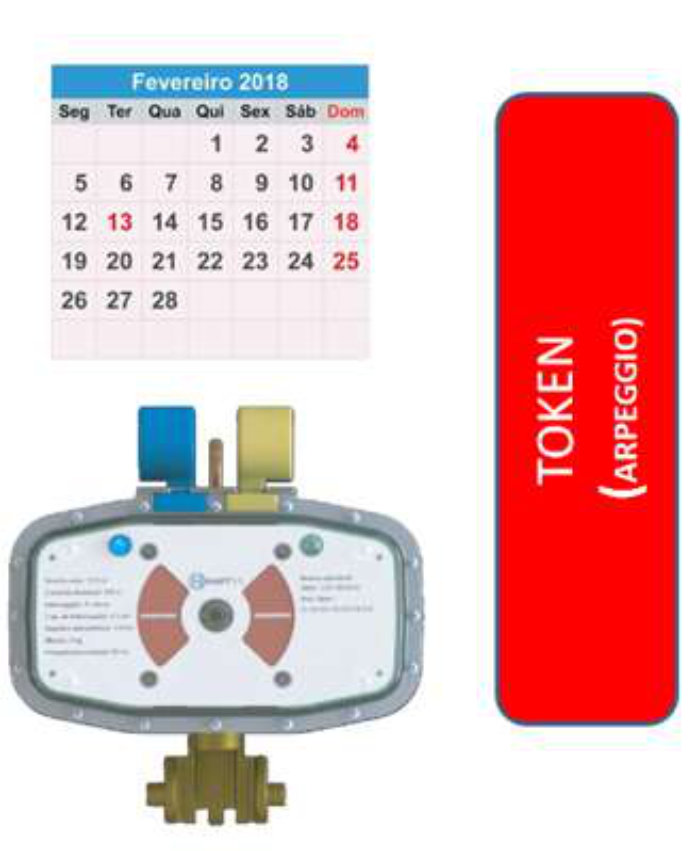
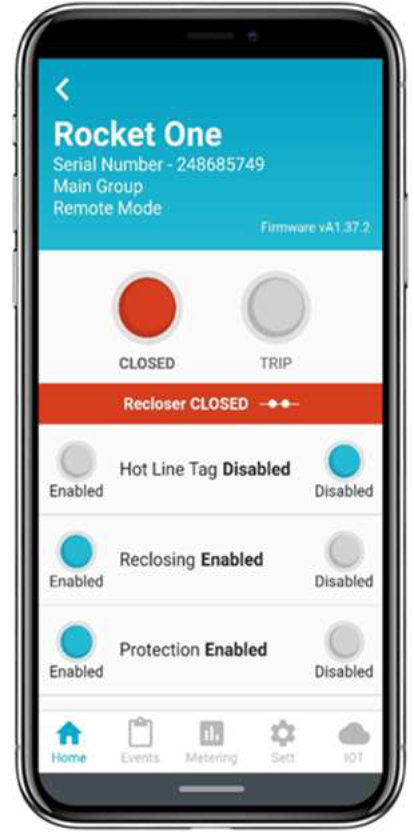
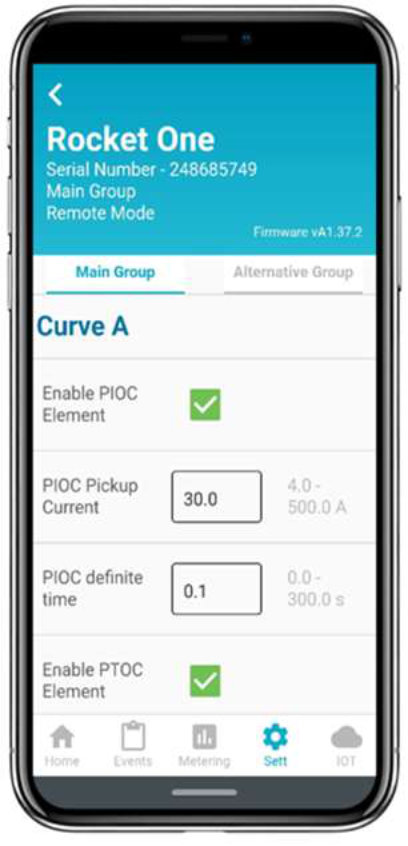
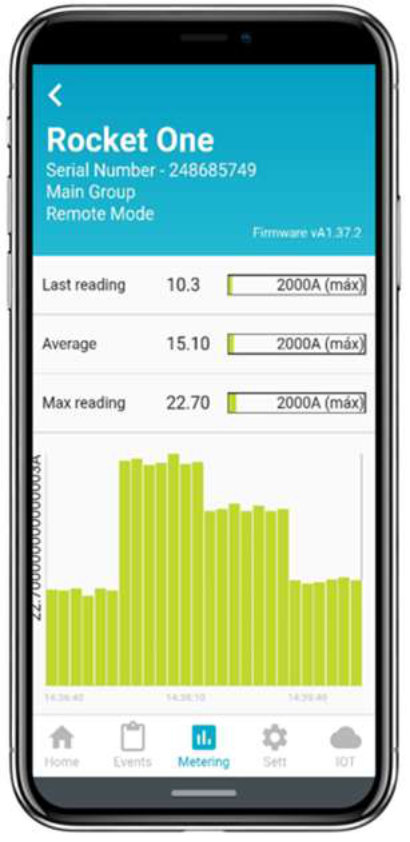
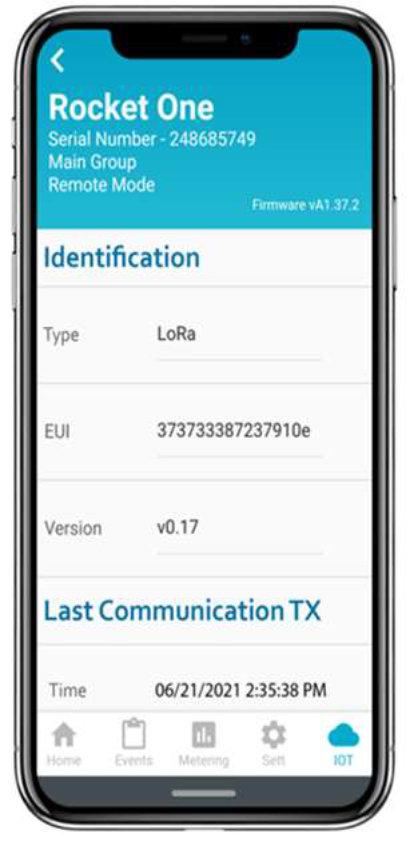
Figure 2- Android APP screens. Details about the application, as well as the recloser itself, are available in the respective manuals.
Rocket-1 has an internal algorithm that combines the current date of the device, acquired by its internal GPS, with its CPU ID. Based on these values, Rocket-1 generates access tokens, with different privilege levels for reading, sending commands and settings. These tokens never repeat, which guarantees secure access to the equipment. The utility is responsible for generating these tokens, through a specific app or by a WEB application.
Communication via Bluetooth is perfectly functional in distances of 30m from the equipment.
With Hart Devices app, it’s possible to send basic commands for opening, closing, block the recloser, activate the live line function, change the setting group, among main one and alternative, change the operation modes, set the communication module, etc…
It’s also possible to monitor the passing current, where the application presents a graph with the measured currents, in RMS values, and calculates the average value.
It’s used to download events and export it using email, WhatsApp, etc. Rocket-1 stores the last 1,000 events, time stamped.
Finally, the application allows us to set all protection elements, in a practical and intuitive way. It’s available in English, Spanish and Portuguese.
No additional hardware is necessary to communicate with the recloser, meaning cost savings and convenience.
3.3.2 Remote Communication (SCADA)
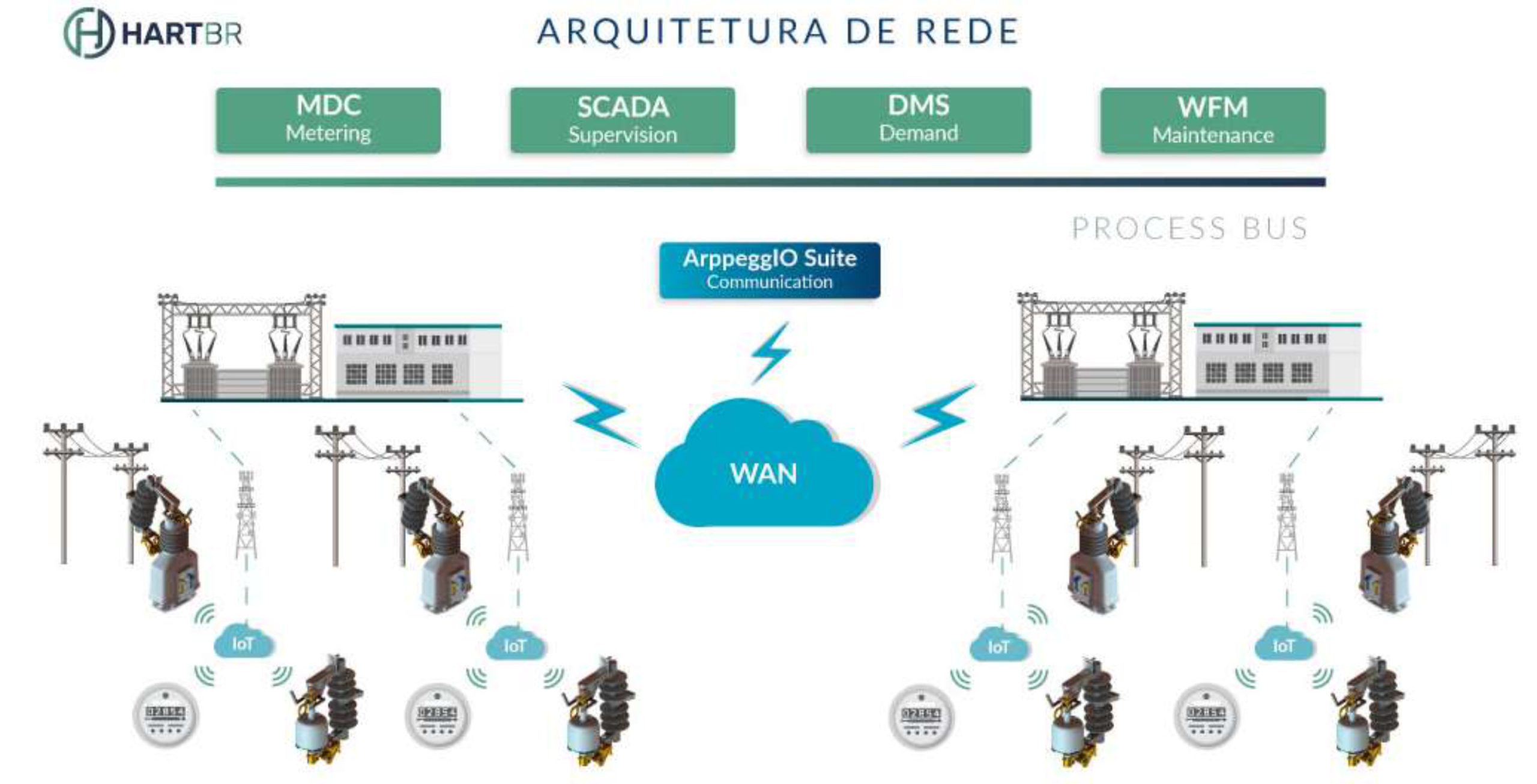
Rocket-1 recloser also has a slot for NICs.3, enabling the integration of the recloser with the Utility SCADA systems. Currently it’s available LoRa and NB-IoT network communication.
In both solutions, the NIC is installed internally in the recloser, with no external connections or antennas. The NIC is powered through the recloser’s power supply system.
LoRa and NB-IoT communication networks are IoT technologies4. IoT networks use specific protocols, due to narrow bands, an intrinsic characteristic of the technology, as they aim at low cost and low energy consumption. HartBR provides the Arpeggio system, which allows the integration of Rocket-1 reclosers to the legacy systems of utilities, as shown in the diagram below.
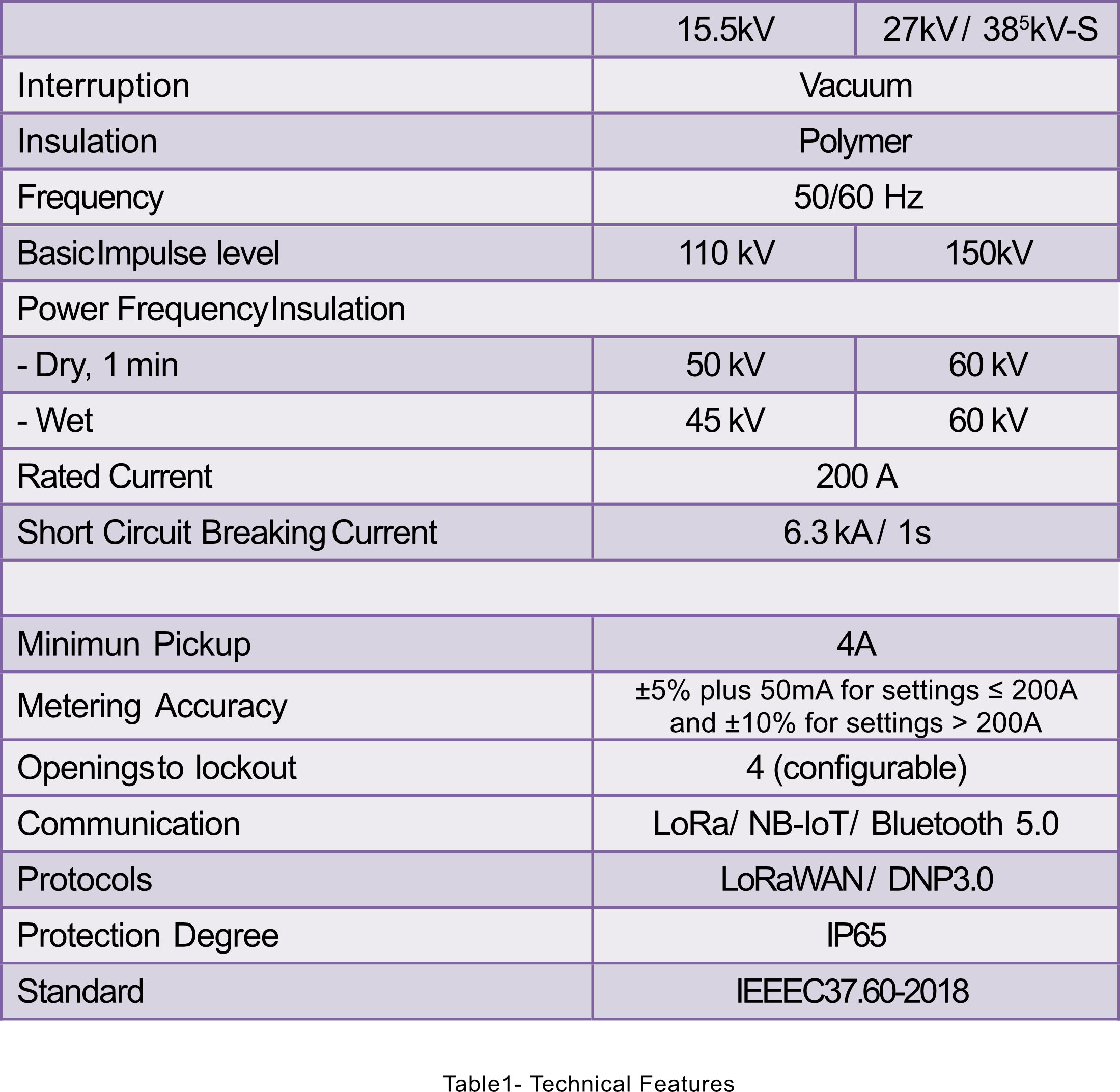
3.4 Technical Characteristics
4. Technical Specifications – Recloser Detailed Features
4.1 Environmental Conditions
Temperature and Humidity: Rocket-1 has been designed to operate within –
10°C up to +50°C, with 100% humidity.
4.2 Pollution / UV protection
Rocket-1 was designed and constructed for the corrosive environment of a distribution system in a tropical zone close to sea and/or exposed to strong sea winds and it provides reliable performance in environments with high exposure to salt, minerals, chemicals, or wind-borne particulate. The insulator contamination level for the equipment is adequate to prevent flashover.
The whole body of Rocket-1 is made of polymeric material, designed for outdoor use. The only external metallic part of the recloser is made of stainless steel. Follow bellow links to download reports regarding accelerated weathering type tests.
IEC 62217: 2012 – UV Weathering test
Tracking and erosion test -1 000 h salt fog test
4.3 Type tests
Rocket-1 was fully type tested following the applicable standard for reclosers, IEEE C37.60 in its last version. Follow below a link to download all related type tests.
Type tests – Rocket-1 Recloser
4.4 Installation
Rocket-1 is designed to be installed in conventional cutouts, based on IEEE
C.77.42.
No special tolls are required to install or even to operate Rocket-1
Follow a link to a movie of a typical installation of Rocket1 (Letterings in
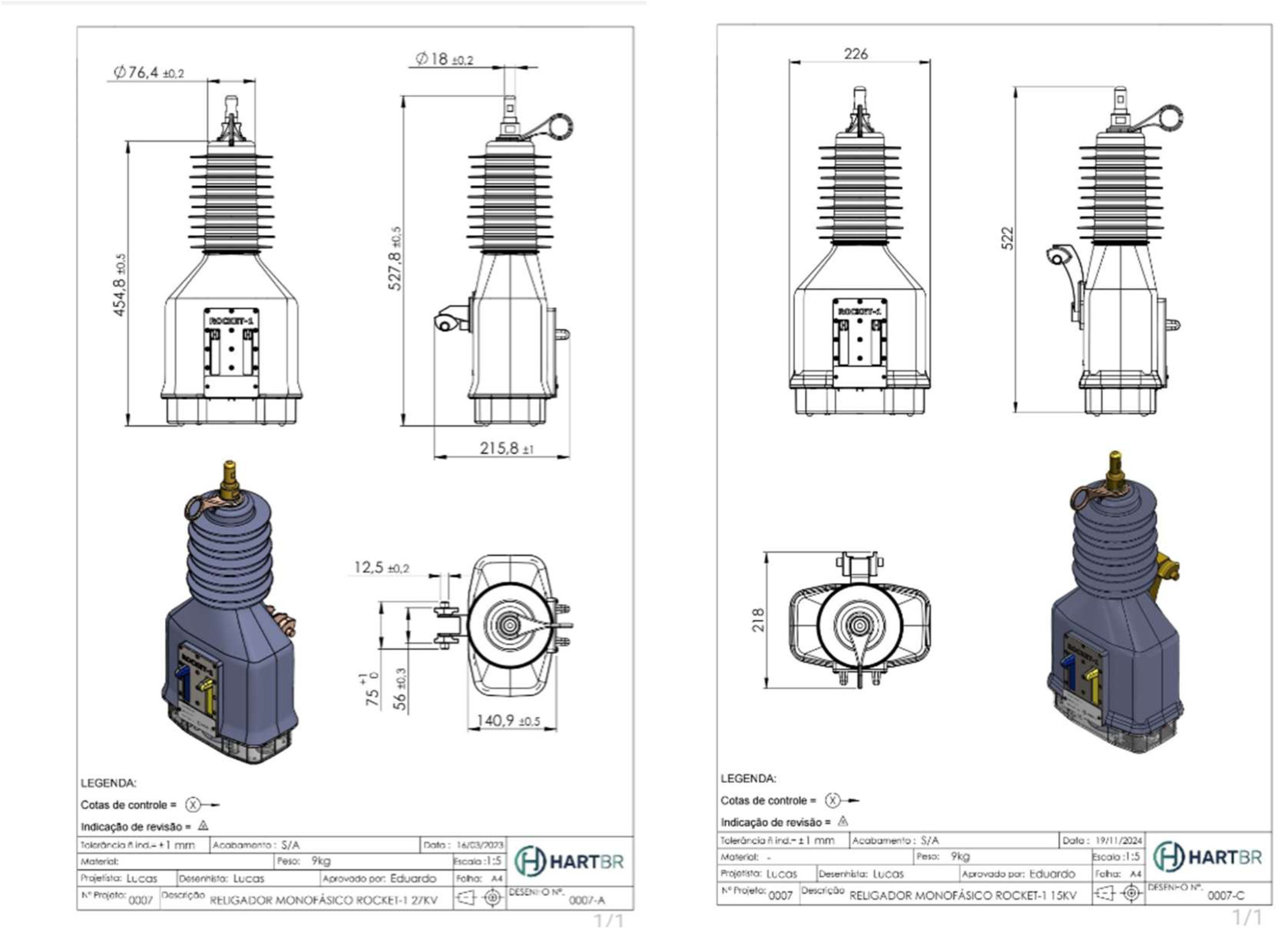
English). It can be installed with a bucked truck or ladder. Rocket-1 weights 9kg.
Typical Installation of Rocket-1 (Portuguese Version)
4.5 Mechanical Requirements
Rcoket-1 has been tested and rated for 300 operations at 100% of the recloser’s interrupting rating for 6,300A.
Operating ambient temperature range is from -10ºC to +50ºC. Rocket-1 has no regular maintenance requirements. It can be set to allow single-phase or three-phase operation when installed in a three-phase tap configuration. No external panel nor cables are required for this configuration. The communication among the reclosers is done by its internal bluetooth module and the setting is done by the app Hart Devices.
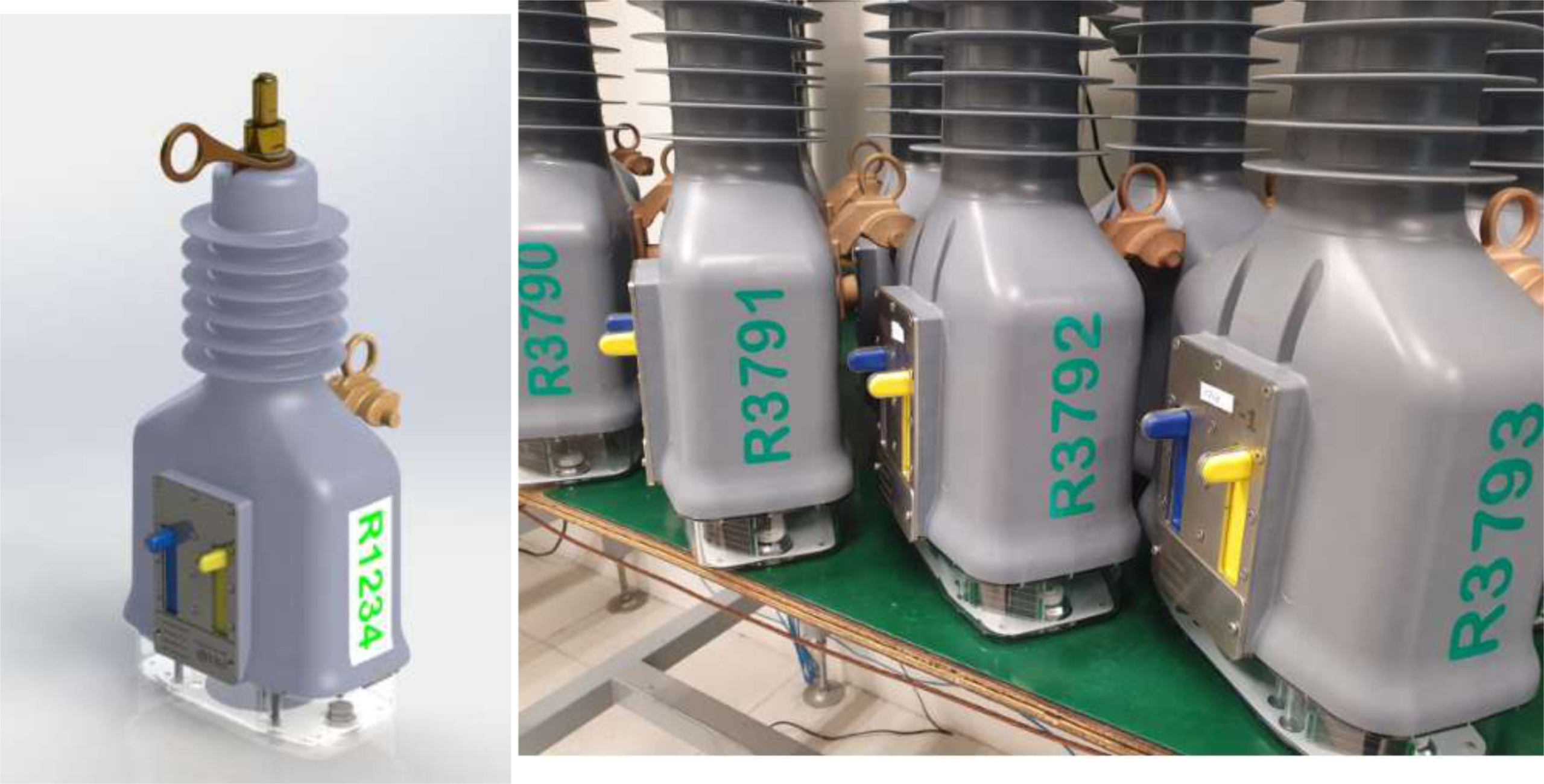
Rocket-1 has two levers to be operated from the ground, using a conventional hot-stick. The yellow lever is responsible to “open” the recloser and blocking any kind of close command, local or remote, from SCADA. The blue lever activates the Live Line function – Hot Line Tag, which blocks the reclosing functions and also actives a different curve for protection, defined by the user. Both levers, when they are pulled down, changes the reclosers from remote command to local command, blocking any remote command from SCADA or app. When the levers are in normal position, Rocket-1 is ready to receive command from SCADA. Rocket-1 can be opened under load with a load break tool.
4.6 Additional Operation Requirement and Features
Rocket-1 has up to three reclosing operations (four trip operations total) before opening to lockout. Each operation is configurable to any protection curve. The recloser can be configurable with a selection of various fuse and recloser curves, including the K, T, besides IEC and IEEE.
The average minimal primary current for Rocket-1 is 1.5A, but the recloser works normally when the current in under this value or even 0A, thanks to the energy stored in the ‘supercaps’. 1.5A is the reference current, once under this value Rocket-1 will start using part of the energy stored to keep working and above this value, the supercaps will be charging. The autonomy of Rocket-1, when it’s open is about 3 days. During this period,
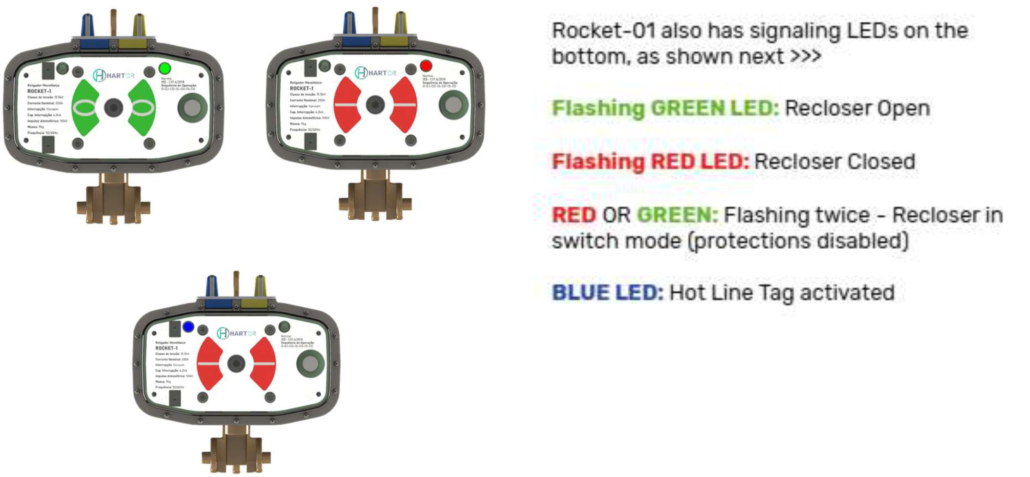
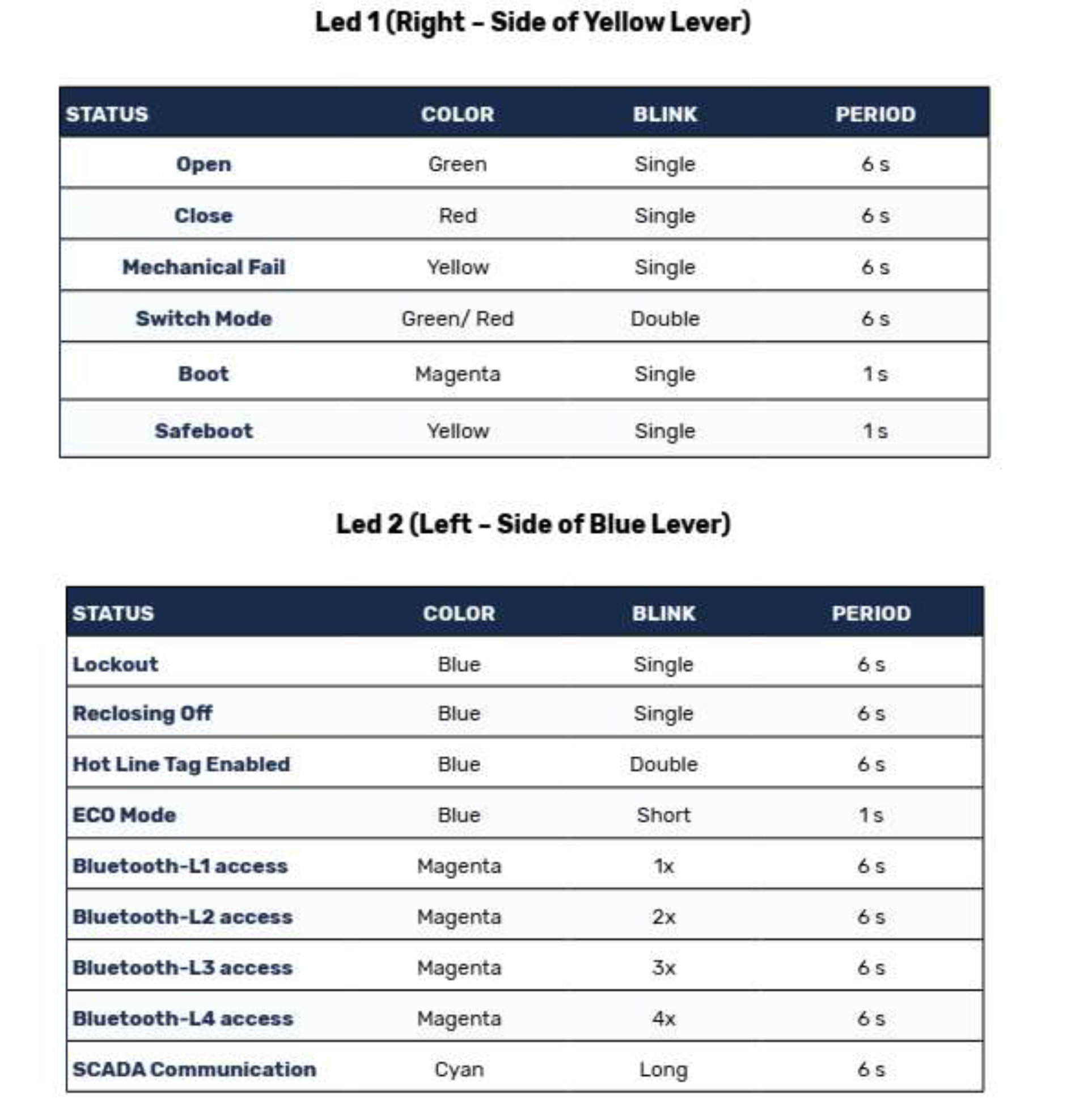
the recloser can operate locally by the levers, by Bluetooth or even remotely, through SCADA commands. Interrupting time of Rocket-1 is 30ms-50ms, regardless of the pre-fault current. Minimum tripping current is 4A. Rocket-1 opens and resets at the end of its operating sequence when the line fault is permanent, creating a visible indication of operation, by its mechanical indicator and bright LEDs. The mechanical indicator is physically connected to the vacuum interrupter. It guarantees confidence in the information for the field crew, since it does not depend on any electronic or firmware. Besides the Live Line function, also known as Hot Line Tag, already described,
Rocket-1 has more two other features for close operation after a lockout event:
Single-Shot: This function prevents the reclosers from executing a new reclosing cycle when it’s closed, after a lockout status, and finds a fault withing a configurable time. So, if this field is set to 1 second, for example, when the recloser executes a close command and finds a faut withing 1 second, it opens and goes to lockout. This function is interesting to avoid wearing the recloser and the distribution line.
Cold Load / Inrush: After a longer period that the recloser stayed open, the inductive loads in the network will be completely discharged. So, when the recloser closes, the ‘load current’ can be much higher for a certain time. This phenomenon is normal, and it’s called Inrush current. To avoid a nuisance trip, Rocket-1 can be set to multiply its pickup for up 10 times, during a time defined by the user. This feature will take time to stabilize the load current and avoid wrong operation of the recloser.
For local communication, Rocket-1 has an internal 7.0 Bluetooth module. The recloser is fully configurable by the app “Hart Devices”, running in any Android device.
It’s not necessary to have any other special tool to configure, monitor or send local commands to Rocket-1.
In the link below there is a short video about the app Hart Devices (subtitled in English)
App Hart Devices (Portuguese Version)
Through the app, it’s possible to download and export the events from the recloser. All configuration is done by the app too and a CSV file can be generated by the app, in order to save in a database or to import the same file in other recloser, to save time in configurations. Rocket-1 has an internal algorithm that combines the current date of the device, acquired by its internal GPS, with its CPU ID. Based on these values, Rocket-1 will request access tokens, with different privilege levels for reading information, sending commands and settings. These tokens never repeat, which guarantees secure access to the equipment. The utility is responsible for generating these tokens, through a specific app or by a WEB application and this feature guarantees safety and tracking of who is accessing the devices locally.
It’s possible to perform functional tests, including reading sensors of the recloser.
Sequence coordination functional is available. It’s used to coordinate with downstream reclosers. If a fault is cleared by a downstream recloser, Rocket-1 will shift to a different time curve before fault-testing and will maintain its sequence coordination setting, until the Coordination Reset time elapses. Rocket-1 supports Sectionalizer function. It’s capable of operating like a sectionalizer, to clear a fault detected by an upstream recloser, during its dead time.
Rocket-1 has a user-configurable sectionalizing mode settings, ranging from 1 to 4 events to trip.
Rocket-1 has an extended lifespan, but it also has an algorithm to calculate the mechanical life of the equipment, considering its real operation, in terms of breaking current characteristics. When the recloser reaches 10% of the remaining life, its LEDs will blink to inform this situation, a specific log will be generated and, if the recloser is integrated to SCADA, this information will also be reported. This life counter is
impossible to reset. Locally any status of the device can be read by the app, but Rocket-1 also has
bright LEDs to inform basic status of the recloser:
4.7 Event Logs
Rocket-1 stores the last 1,000 events in a non-volatile memory. All events are time stamped, and the app can generate a CSV file to be exported by any other app of the smartphone or even to be stored. The CSV file contains the same information as the app, including all identification numbers of the recloser. This feature is so interesting when a field crew needs some remote support from engineers. Anyone can open the event file, using Excel. Its not necessary to have the app the open the file. Rocket-1 stores any event that occurred in the grid and also internal information, as GPS status, if some configuration was changed, if the command came from app, lever or SCADA, among many other information.
Basically, and not limited, Rocket-1 has the following information in the event log:
Forced Closes
Trips Operations caused by Overcurrent.
Total Number of Open Operations
Trips caused by Sectionalizing.
Trips caused by Local Manual Open
Trips caused by three-phase (or bi-phase) Operation
Total number of Opens
Trip events:
✔ Event Name
✔ Date
✔ Time
✔ Protection element
✔ Fault Current, A
4.8 Optional Accessories and Features
Rocket-1 is normally supplied ready to be integrated into SCADA, using DNP3 protocol. Most of the customers use this feature, since it brings valued added functionality to the recloser. Currently it’s common to see any three-phase recloser integrated to SCADA systems, using different communication modules and infrastructure, but it’s still not so common to see single phase reclosers into SCADA, mainly recloser powered by
harvest energy from the primary current.
Rocket-1 was designed to use IoT networks to be integrated into SCADA. Currently it supports LoRa or NB-IoT modules. Rocket-1 has an internal micro-PCI express slot, that support different modules. We really want to encourage the customers to consider SCADA integration and be able to use Rocket-1 in total, so our solution provides different architectures for integration.
Rocket-1 can receive any remote command from SCADA, including “OPEN”/”CLOSE” commands, once it stays in the cutout, even when it’s in lockout. Rocket-1 will stay in “open” position, without any current passing through it, for up to 3 days. During this time, Rocket-1 can receive a remote command or execute a local command by the levers or by the app.
Rocket-1 can support any remote command, but the following list summarizes
the basic features:
✔ Three-Phase status and control
✔ Single-Phase status and control
✔ Local/Remote status
✔ Main Profile
✔ Alternative Profile
✔ Recloser function – status and control
✔ Hotline tag status and control
✔ Primary voltage for each unit
✔ Primary Phase current
✔ Supercap voltage (there is no battery)
✔ Fault Indication
All events are time-stamped.
4.9 Integration with LoRa Everynet
Everynet operates the largest, neutral-host, Low Power Wide Area (LPWA) national networks in the world. Their networks are open, highly resilient and entirely server agnostic – increasing speed to market and revenue for our partners and end users. With zero CapEx required, Everynet helps to scale and achieve profitability on day one.
Everynet is just an option among other LoRa service providers around the world. Rocket-1 is compliant with LoRaWAN standards.
HartBR has deployed several reclosers using their network with success and we consider a good cost-effective solution.
As previously explained, this option can be aggregated with the next scenarios we’ll detail further.
Rocket-1 supports LoRa, with an internal radio and embedded antenna. There is nothing external! LoRa module is powered by the harvest energy stored in the supercap bank. So, Rocket-1 keeps connected to SCADA, even when there is no current in the grid and the recloser is in “open” position.
LoRa network can be used with other kinds of devices, including smart meters, fault indicators and public light systems, for example.
1.1 Integration with LoRa and Proprietary Gateways
The utility can also build its own LoRa network!
HartBR also has many customers who have decided to build it private LoRa network.
This happens when there is no LoRa coverage from Everynet, where the reclosers will be installed. In this case a local and private gateway can be installed, and a single gateway can support about 50 reclosers, without problems! There are a huge number of Lora gateways providers, but HartBR normally uses gateways from Khomp, a Brazilian company.
These LoRa gateways can be installed directly on the poles and powered by low voltage (110V~220V). They are supplied ready to use, with a LoRa antenna and another 3G/4G antenna. So, a common SIM card can be installed into the gateway (it
has an internal modem), to provide backbone communication from the gateway to the center of operation. For example, the gateway ITG, from Khomp, can support 2 different SIM Cards, to provide best signal quality, with different carriers.
When the gateway is installed on the pole, over about 4m from the ground, it’s possible to cover an area of about 5km of radius. Any recloser under this area will be coverage by a single gateway.
To improve the reliability, it’s possible to override the gateways, to create some redundance. This is a native feature in Lora technology.
With its own gateway, it’s also possible to connect other technologies to provide the backbone connectivity, instead of 3G/4G. LoRa gateways normally have an Ethernet port to connect other communication modules, as a 400Mhz radio, satellite or even a ethernet cable.
More information about ITG Khomp gateway can be found at
https://www.khomp.com/iot/en/produto/gateway-telemetry-lora-itg-201/ .
This scenario can also be perfectly used together the Everynet LoRa, as a
complementary solution, where there is no coverage from Everynet.
4.10 NB-IoT
NB-IoT is a kind of communication technology offered by the telecom carrier around the world. Based on LTE technology, this service is commonly available where there is 4G coverage and it’s another option to integrate Rocket-1 into SCADA systems.
To use NB-IoT, it’s necessary to install the respective SIM card directly in Rocket-1. Its internal modem is also powered by the energy stored in the supercaps bank, from the harvest energy. There is nothing external from the recloser, including the antenna embedded in Rocket-1.
4.11 Qualification and testing requirements
Rocket-1 was fully type tested at CESI – Italy. The reports are available at Type tests – Rocket-1 Recloser HartBR performs all routine tests required by the standard IEEE C37.60 and also does other tests to guarantee the quality of assembly. All reclosers are fully tested in a room at 50°C, for 12 hours, to accelerate any possible assembly failure. Definitively there are no tests done in samples. 100% of the reclosers performs the same routine tests. HartBR invites all customers to witness the routine tests in the factory, so they can know all the assembly and testing process.
Follow below a short movie about HartBR factory.
HartBR Facilities
Link to technical manual
Reference Guide for Rocket-1
5. Rocket-1 – Regular Delivery Features
5.1 Dimensions
5.2 Nameplate information
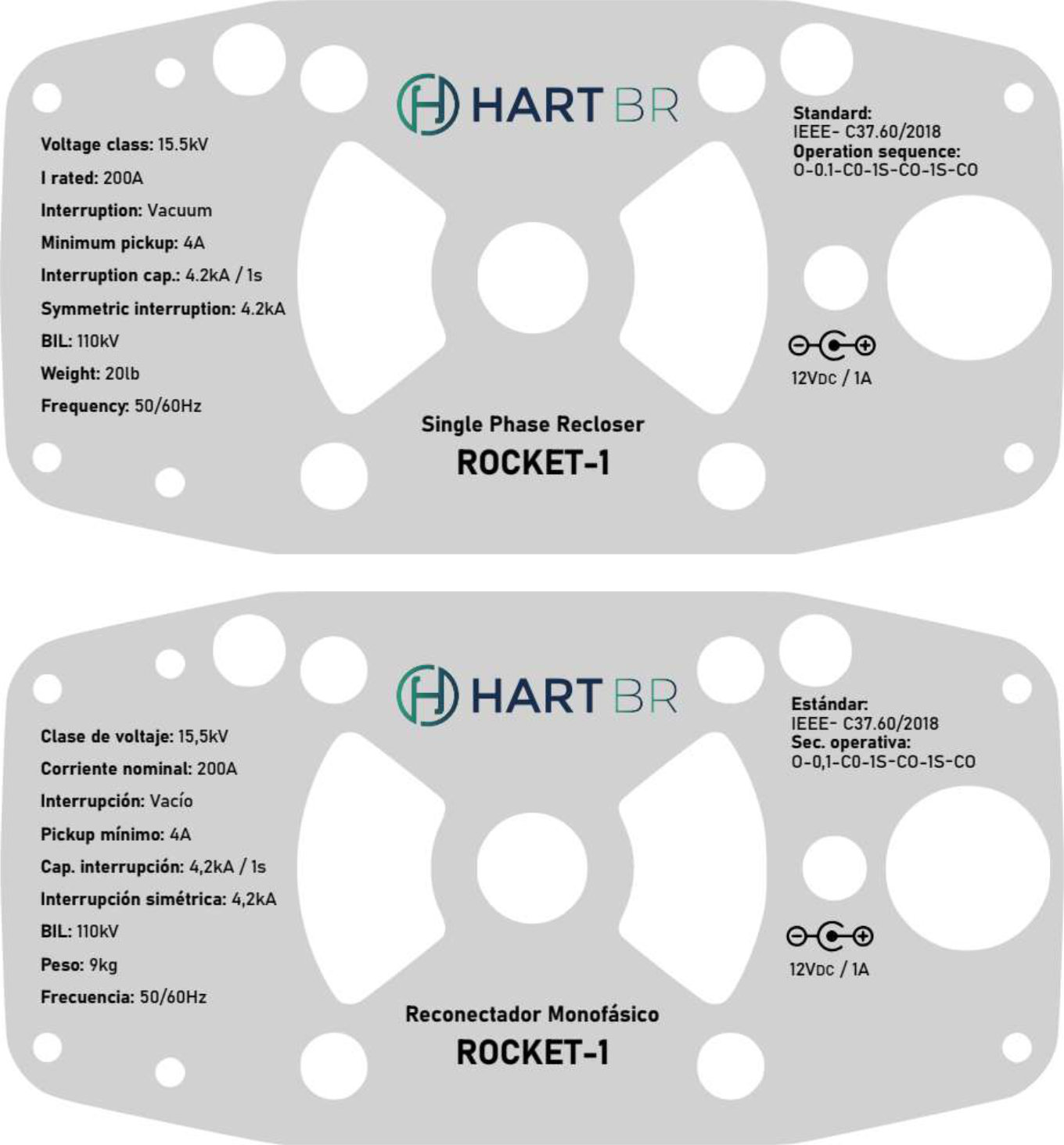
Nameplate of Rocket-1 can be customized. Follow below the basic nameplate format.
It can be in English or Spanish and it can have other information, as required.
When the customer requires an identification number. It´s placed a reflexive sticker in the lateral of Rocket-1, as the example below.
5.3 Packing
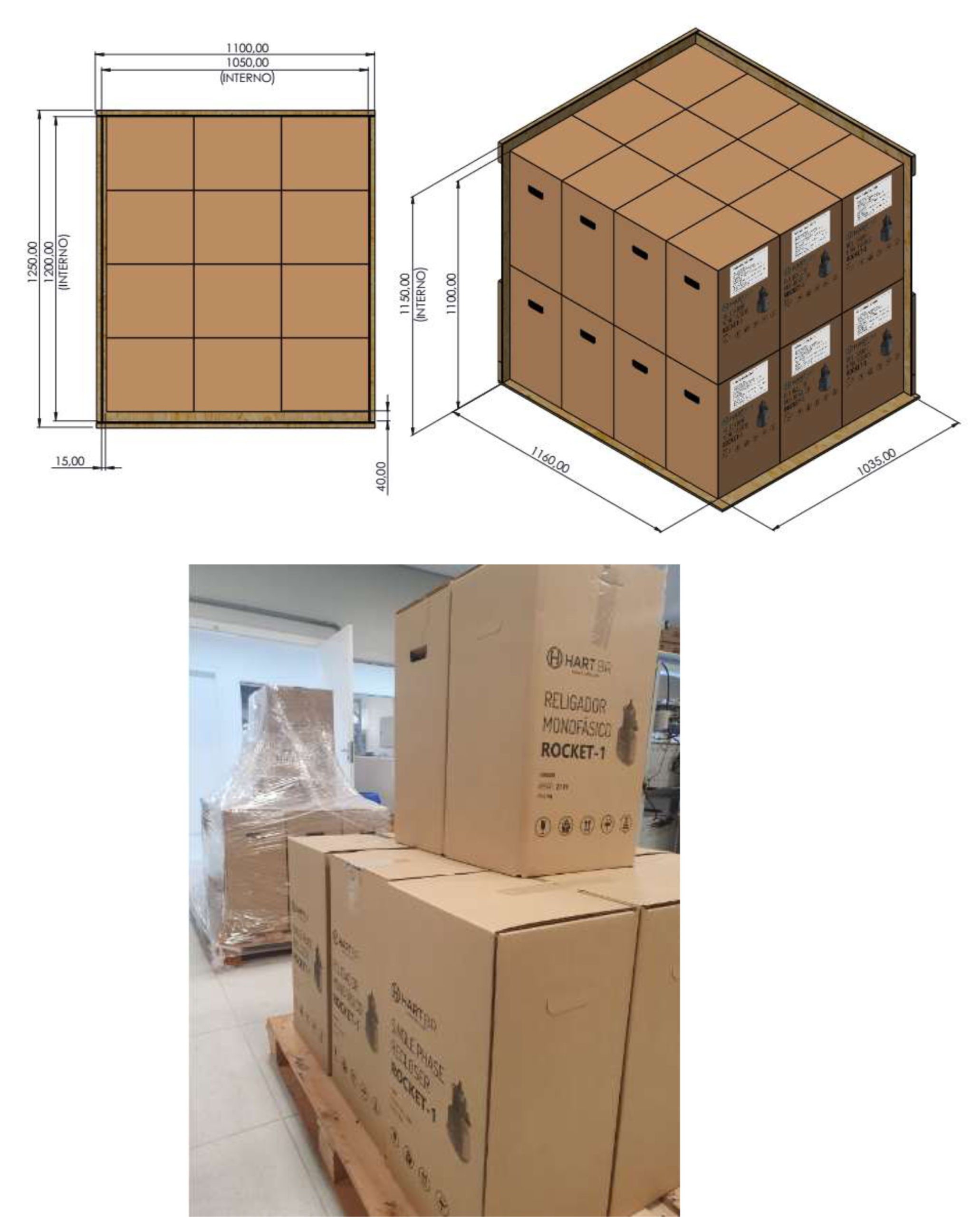
All reclosers are supplied in woods crates, designed for exportation. Each recloser is packaged in its individual carton box.
5.4 Guarantee
Normally 12 or 24 months, according to the customer’s requirements.
Browse our extensive range of high voltage products.